Insulin Syringes: Buying Guide
Understanding Insulin Syringes
Selecting the correct insulin syringe is a critical part of managing your health. Because these devices are used daily, finding a configuration that balances comfort with dose accuracy is essential. Most syringes are defined by three primary specifications: the thickness of the needle, the length of the needle, and the total volume the barrel can hold. Modern manufacturing has allowed for thinner needles and shorter lengths, which often results in a more comfortable experience for the user.
How to Choose the Right Syringe
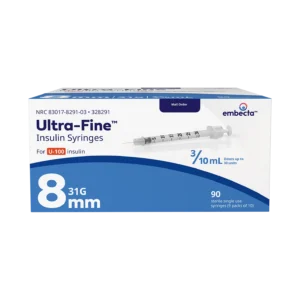
- Needle Gauge: This refers to the thickness. A higher number, such as 31G, indicates a thinner needle than a 28G or 30G option.
- Needle Length: Shorter needles, like 5/16 inch or 6mm, are designed to deliver insulin into the fatty tissue while reducing the risk of hitting muscle.
- Barrel Capacity: Choose a size that closely matches your largest dose. A 0.3cc barrel is ideal for doses under 30 units, while 1.0cc is for doses up to 100 units.
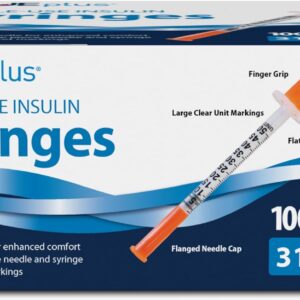
- Scale Markings: Some syringes offer half unit markings for those who require very precise dosing.
When browsing our selection, consider these three factors to ensure the product meets your requirements:
Best Recommendations by Use Case
We have analyzed our catalog to find the best options based on value, precision, and comfort.
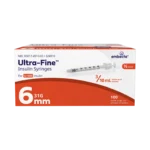
Best Value Option: This 100 count box offers the lowest price per unit in our inventory, making it an excellent choice for budget conscious shoppers.
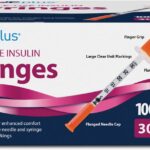
Best for Precision Dosing: The half unit scale allows for highly accurate measurements, which is critical for individuals sensitive to small insulin adjustments.
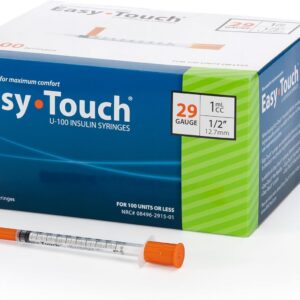
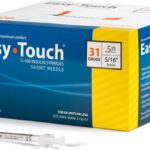
Best for Daily Comfort: EasyTouch is known for high quality lubricants and thin wall technology, providing a smooth experience at a competitive price.
Key Specifications Explained
Needle gauge is one of the most discussed attributes. A 31G needle is significantly thinner than a 27G needle. While thinner needles are generally more comfortable, they can be more fragile. Needle length is also a factor. Most clinicians now recommend shorter needles, such as 6mm or 8mm (5/16 inch), as they effectively reach the subcutaneous layer for most body types. Finally, capacity is measured in cubic centimeters (cc), which is equivalent to milliliters (mL). A 0.3cc syringe holds 30 units, a 0.5cc syringe holds 50 units, and a 1.0cc syringe holds 100 units.
Frequently Asked Questions
What is the difference between 30G and 31G needles?
The G stands for gauge, which measures the thickness of the needle. The higher the number, the thinner the needle. Therefore, a 31G needle is thinner and typically more comfortable than a 30G needle.
What does 0.3cc, 0.5cc, and 1.0cc mean?
These numbers refer to the volume capacity of the syringe barrel. 0.3cc holds up to 30 units of insulin, 0.5cc holds up to 50 units, and 1.0cc holds up to 100 units. You should choose the smallest barrel that can accommodate your largest single dose for better visibility of the scale.
Can insulin syringes be reused?
No. Insulin syringes are designed for single use only. Reusing a needle can dull the tip, leading to painful injections, and increases the risk of infection or lipohypertrophy.
How should I dispose of used syringes?
Used syringes should always be placed in a puncture resistant container. We recommend using a dedicated product like the Covidien Sharps Container to ensure safety for yourself and sanitation workers.