How to Choose Insulin Syringes
The Importance of Selecting the Right Syringe
For individuals managing diabetes, the daily routine of injections requires precision and comfort. Choosing the right insulin syringes is not just about the brand; it is about matching the technical specifications of the syringe to your specific dosage and physical needs. A mismatch can lead to dosing errors or unnecessary discomfort. This guide breaks down the three primary factors you must consider: barrel capacity, needle gauge, and needle length.
1. Understanding Barrel Capacity
The barrel capacity, measured in cubic centimeters (cc) or milliliters (mL), determines the maximum amount of insulin the syringe can hold. It is important to choose a size that is close to your typical dose to make the scale markings easier to read. Most manufacturers offer three standard sizes:
0.3cc Syringes: These are designed for small doses, typically up to 30 units of insulin. They often feature widely spaced markings for better visibility.
0.5cc Syringes: These are ideal for medium doses up to 50 units. They offer a balance between size and readability.
1.0cc Syringes: These are used for larger doses up to 100 units. While they hold more, the markings may be closer together than on smaller barrels.
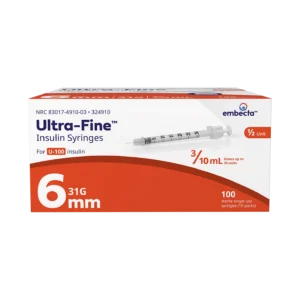
If you require very precise measurements, consider a model like the BD Embecta Ultra-Fine Insulin Syringe with Half-Unit Scale, which allows for micro-adjustments in dosing.
2. Selecting the Right Needle Gauge
The gauge (G) refers to the thickness of the needle. In the world of medical supplies, the higher the gauge number, the thinner the needle. Thinner needles generally cause less pain during insertion, but they may be more fragile or take slightly longer to deliver the insulin.
Common gauges include 28G, 30G, and 31G. A 31G insulin syringe is currently among the thinnest options available, providing a very comfortable experience for most users. If you have thicker skin or find that thinner needles bend too easily, a 30G or 28G option might be more appropriate.
3. Choosing Needle Length
Needle length is critical for ensuring the insulin reaches the subcutaneous fat layer without hitting the muscle. Injections into muscle tissue can cause the insulin to be absorbed too quickly, leading to hypoglycemia.
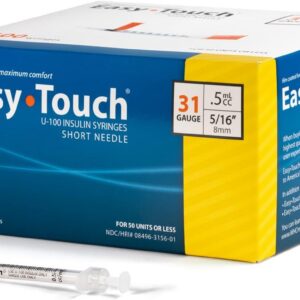
Standard lengths include 1/2 inch (12.7mm) and 5/16 inch (8mm). Many users prefer the shorter 5/16 inch needles, such as those found on 5/16 inch insulin syringes, because they reduce the risk of intramuscular injection. Extremely short options like 6mm needles are also becoming popular for their ease of use and reduced anxiety for those who are needle-sensitive.
Brand Comparison: BD, EasyTouch, and TRUEplus
- BD Embecta: Known as the industry standard for precision and reliability. They offer specialized features like half-unit scales.
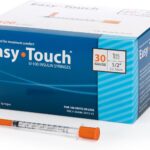
- EasyTouch: A favorite for those seeking a balance of high quality and affordability. Their needles are known for being sharp and lubricated for comfort.
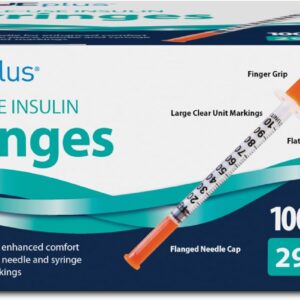
- TRUEplus: The best choice for budget-conscious users. They provide reliable performance at a significantly lower cost per unit.
Different brands offer unique benefits depending on your priorities for quality, specialized features, or budget:
Best Insulin Syringes for Different Needs
Based on our catalog, here are the top picks for common user requirements:
Best for Small Doses: The 0.3cc capacity and 31G thickness provide maximum precision and comfort for low-dose requirements.
Best Value for Daily Use: TRUEplus offers the most competitive pricing for a full 100 count box without sacrificing the comfort of a 31G needle.
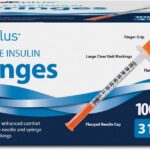
Best for High Doses: The 1.0cc barrel is necessary for doses up to 100 units, and the 1/2 inch needle length is a traditional choice for many users.
Safety and Disposal
Always prioritize safety when handling insulin syringes. Never reuse a syringe, as the needle dulls after a single use and can cause skin trauma or infection. Before injecting, clean the site with alcohol swabs. After use, immediately place the syringe in a puncture-resistant container like the Covidien SharpSafety Sharps Container to protect yourself and others.
Frequently Asked Questions
What does the ‘G’ in needle size mean?
The ‘G’ stands for gauge, which measures the thickness of the needle. A higher number like 31G indicates a thinner needle, while a lower number like 28G indicates a thicker needle.
Can I use a 1.0cc syringe for a 10 unit dose?
Yes, you can, but it may be harder to measure accurately. A 0.3cc syringe is better for a 10 unit dose because the scale markings are more spread out and easier to read.
Is a 5/16 inch needle better than a 1/2 inch needle?
For many people, the 5/16 inch (8mm) needle is preferred because it is less likely to reach the muscle layer, making the injection safer and often less painful.
What is a half-unit scale syringe?
A half-unit scale syringe has markings for every 0.5 units of insulin. This is particularly useful for children or individuals who are very sensitive to insulin and need highly specific doses.