Choosing Standard Syringes and Needles
Understanding Standard Syringes and Needles
When navigating the world of medical supplies, selecting the correct standard syringes and needles can be overwhelming. Unlike specialized insulin delivery systems, standard hypodermic needles are used for a wide range of applications, including intramuscular injections, blood draws, and subcutaneous medication delivery. Choosing the wrong combination can lead to unnecessary pain, improper dosing, or safety risks. This guide will walk you through the three primary factors: needle gauge, needle length, and safety mechanisms.
The Importance of Needle Gauge
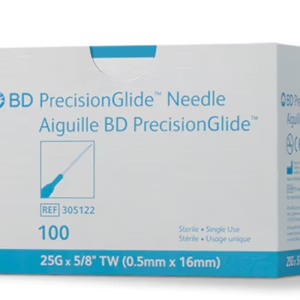
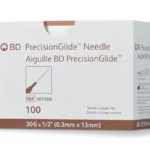
The gauge of a needle refers to the diameter of the hole in the needle shaft. A key rule to remember is that the higher the gauge number, the thinner the needle. For example, a 30G needle is significantly thinner than an 18G needle. Thinner needles are generally associated with less pain during injection, making them ideal for subcutaneous use. However, thicker needles are necessary when the medication is viscous or when a large volume of fluid needs to be transferred quickly. For those prioritizing comfort, the BD PrecisionGlide Hypodermic Needle 30G is an excellent choice for shallow injections.
Selecting the Correct Needle Length
- Short Needles (1/2 inch to 5/8 inch): Typically used for subcutaneous injections where medication is delivered into the fatty tissue just below the skin.
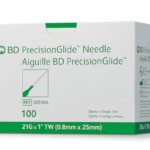
- Medium Needles (1 inch): Often used for intramuscular injections in adults with average body mass.
- Long Needles (1.5 inch to 2 inch): Used for deep intramuscular injections or for patients with higher body mass to ensure the medication reaches the muscle layer.
Needle length is determined by the depth of the injection site. Using a needle that is too short may prevent the medication from reaching the intended tissue, while a needle that is too long could cause injury. Here are the common length categories:
Safety Features and Shielding
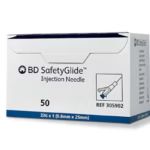
In clinical and home settings, preventing accidental needle sticks is a top priority. Safety needles feature integrated mechanisms to cover the needle immediately after use. Options like the BD SafetyGlide Hypodermic Needle use a sliding shield, while the Kendall Magellan Hypodermic Safety Needle features a robust integrated shield that can be activated with one hand. These safety options are highly recommended for caregivers or anyone concerned about sharps safety.
Syringe and Needle Combinations
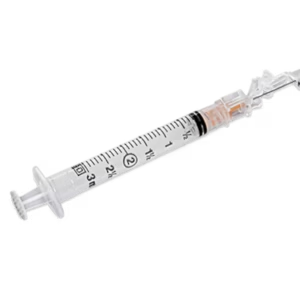
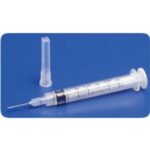
You can purchase needles and syringes separately or as pre-attached combinations. Pre-attached units, such as the Monoject Syringe with Needle, offer convenience and reduce the risk of contamination during assembly. When choosing a syringe, consider the volume capacity. A 1mL syringe is ideal for precise, small doses, whereas a 3mL syringe is the standard for most common medical injections.
Essential Preparation and Disposal
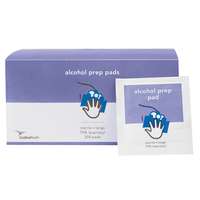
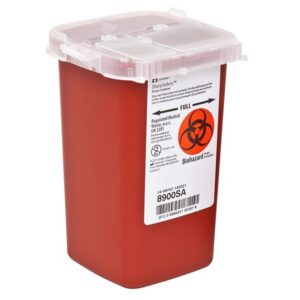
No injection process is complete without proper sterilization and disposal. Always use alcohol prep pads to clean the injection site and the vial stopper. Once the injection is finished, the needle should never be recapped. Instead, it must be placed immediately into a puncture resistant container. The Covidien SharpSafety Sharps Container is a reliable solution for safe home disposal.
Comparison of Popular Needle Options
The following table compares different needle specifications to help you identify the right tool for your specific application.
Recommended Standard Needles and Syringes
Based on common medical requirements, these products are top performers in their respective categories.
Best for Maximum Comfort: The 30G diameter is one of the thinnest available, significantly reducing injection discomfort.
Best for Caregiver Safety: Features a built-in safety mechanism to protect against accidental needle sticks after use.
Best All-in-One Combination: Provides a 3mL syringe and needle in a single, sterile package for ease of use.
Best for Intramuscular Use: A standard gauge and length for common intramuscular injections in adult patients.
Frequently Asked Questions
What does the gauge number mean on a needle?
The gauge number indicates the thickness of the needle. A higher number, such as 30G, means the needle is thinner. A lower number, such as 18G, means the needle is thicker and has a wider opening.
Can I use standard syringes for insulin injections?
While standard syringes can technically deliver medication, insulin is usually measured in units rather than milliliters. It is highly recommended to use dedicated insulin syringes or pen needles for accurate insulin dosing.
How do I safely dispose of used needles?
Used needles should never be thrown in the regular trash. They must be placed in a puncture resistant sharps container immediately after use to prevent injury to others.
What is the difference between Luer Lock and Slip Tip?
Luer Lock syringes allow the needle to be twisted and locked into place, providing a more secure connection. Slip Tip syringes allow the needle to be pushed onto the tip, which is often used for quick applications or oral dosing.