Best Standard Syringes: Top Picks
Choosing the Best Standard Syringes and Needles
When it comes to clinical procedures, the quality of your equipment is paramount. Selecting the right Standard Syringes and Needles involves understanding the specific requirements of the task at hand. Whether you are a healthcare professional or managing care at home, the choice between different gauges, lengths, and safety features can significantly impact both accuracy and patient comfort. Standard syringes are typically used for intramuscular or subcutaneous injections, as well as for drawing blood or fluids.
Understanding Gauge and Length
- Needle Gauge: This refers to the diameter of the needle. A higher gauge number indicates a thinner needle. For example, a 30G needle is much thinner than an 18G needle.
- Needle Length: The length is chosen based on the depth of the injection. Shorter needles like 1/2 inch are often used for subcutaneous injections, while longer needles like 1 inch or 1.5 inches are used for intramuscular applications.
- Syringe Volume: Standard syringes come in various sizes, with 1mL and 3mL being common for many medical needs.
The two most important specifications to consider are the needle gauge and the needle length. These factors determine how the needle interacts with the tissue and the viscosity of the fluid being administered.
Top Recommendations for Standard Needles
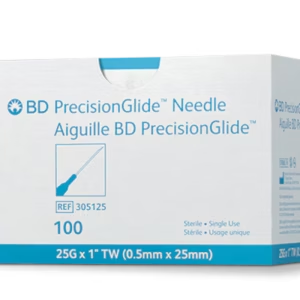
Based on clinical reliability and user preference, here are our top picks from the BD PrecisionGlide and SafetyGlide lines.
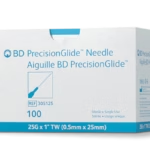
Best for Versatility: This needle offers a balanced gauge and length that is suitable for a wide range of common clinical applications, making it a staple for any medical kit.
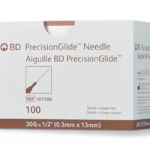
Best for Patient Comfort: The 30G diameter is exceptionally thin, which helps minimize discomfort during shallow injections. It is competitively priced for a 100 count box.
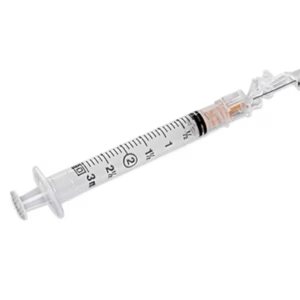
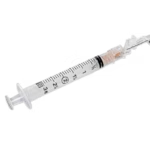
Best for Safety and Ease of Use: This all-in-one solution includes a 3mL syringe and a needle with an integrated safety mechanism to help prevent accidental needlestick injuries.
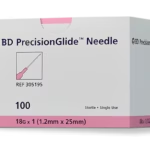
Best Value for Large Gauge Needs: For tasks requiring a wider diameter, such as drawing thicker fluids, this 18G needle is highly reliable and offers great value per unit.
Standard Syringes and Safety Shields
Safety is a critical concern in any medical setting. Products like the Kendall Magellan Hypodermic Safety Needle feature integrated safety shields. These shields are designed to cover the needle immediately after use, significantly reducing the risk of exposure to bloodborne pathogens. Using safety-engineered devices is often a requirement in professional healthcare environments to comply with safety regulations.
Essential Accessories for Safe Injection
- Alcohol Prep Pads: Sterilizing the injection site is non-negotiable. We recommend Cardinal Health Alcohol Prep Pads for reliable site preparation.
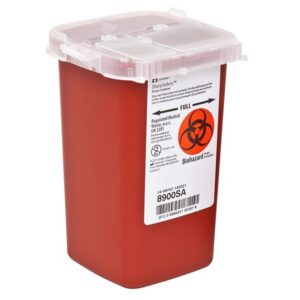
- Sharps Disposal: Never dispose of used needles in regular trash. A dedicated container like the Covidien SharpSafety Sharps Container is essential for home and clinical safety.
- Sterile Swabs: For larger areas, Kendall Webcol Alcohol Prep Pads offer high-quality 2-ply sterilization.
To ensure a sterile and safe environment, you should always have the proper accessories on hand alongside your syringes and needles.
Frequently Asked Questions
What is the difference between a Luer Lock and a Luer Slip syringe?
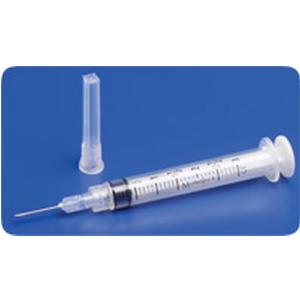
A Luer Lock syringe, such as the Monoject 3mL Luer Lock model, features a threaded tip that allows the needle to be twisted and locked into place for a secure connection. A Luer Slip tip allows the needle to be pushed onto the tip and held by friction.
Can I reuse standard hypodermic needles?
No. Standard hypodermic needles are designed for single use only. Reusing needles can lead to infections, dull the needle point, and cause unnecessary pain or tissue damage.
Which gauge is best for a painless injection?
Generally, a higher gauge number like 30G is thinner and tends to be more comfortable for the patient. However, the choice also depends on the thickness of the medication being injected.
How do I choose the correct needle length?
Needle length is determined by the injection type and the patient’s body composition. Subcutaneous injections typically use shorter needles (1/2 inch to 5/8 inch), while intramuscular injections require longer needles (1 inch to 1.5 inches).