5/8″ vs 1/4″ Needle Length: Comparison
Understanding Needle Length for Insulin
When managing diabetes, the length of your needle is just as important as the gauge. The goal of any insulin injection is to deliver the medication into the subcutaneous fat layer, avoiding the muscle tissue underneath. Choosing between a 5/8 inch (16mm) and a 1/4 inch (6mm) needle often depends on your body mass index (BMI), the injection site, and your specific comfort preferences. While shorter needles have become the modern standard for many, longer needles still serve a vital purpose for certain users. You can explore our full range of insulin syringes to see the variety of lengths available.
Comparison: 5/8 inch vs 1/4 inch Needles
The following table highlights the primary differences between these two common needle lengths used in insulin therapy. Note that 1/4 inch needles are often labeled as 6mm in clinical settings.
| Feature | 5/8 inch (16mm) | 1/4 inch (6mm) |
|---|---|---|
| Injection Depth | Deep Subcutaneous | Shallow Subcutaneous |
| Standard Gauge | Often 27G | Often 31G |
| Pinch Technique | Usually Required | Rarely Required |
| Comfort Level | Moderate | High |
| Best For | Higher BMI / Specific Sites | Standard Daily Use |
The 5/8 inch Needle: When to Use It
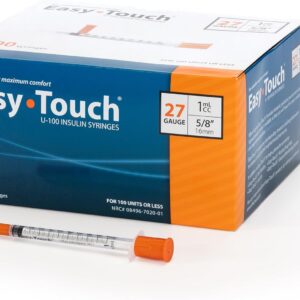
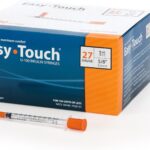
The 5/8 inch needle, measuring approximately 16mm, is one of the longer options available for subcutaneous injections. While the medical community has trended toward shorter needles, the 5/8 inch length remains a reliable choice for individuals with a higher percentage of body fat at their injection sites. This length ensures that the medication reaches the subcutaneous layer effectively. However, using this length often requires a “pinch-up” technique to lift the skin and fat away from the muscle to prevent painful intramuscular injections. For those who require this specific length, the EasyTouch Insulin Syringe 27G x 5/8″ is a popular and high-quality choice.
The 1/4 inch Needle: The Modern Standard
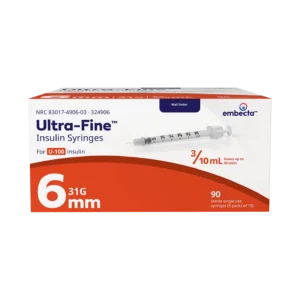
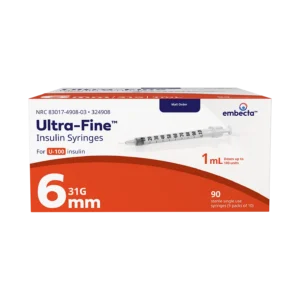
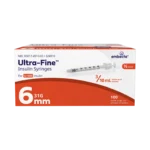
The 1/4 inch needle, or 6mm, is widely considered the standard for modern insulin delivery. Medical research suggests that shorter needles are just as effective at delivering insulin as longer ones, with a significantly lower risk of accidentally hitting muscle tissue. Because these needles are shorter and typically feature a higher (thinner) gauge like 31G, they offer a much more comfortable injection experience. Most users find they do not need to pinch the skin when using a 6mm needle. Products like the BD Embecta Ultra-Fine Insulin Syringe 31G x 6mm are designed for this exact balance of safety and comfort.
Factors to Consider When Choosing
- Body Mass Index (BMI): Individuals with more subcutaneous fat may prefer the 5/8 inch length, while those with less fat usually benefit from the 1/4 inch size.
- Injection Site: Skin thickness varies across the body; a length that works for the abdomen might be too long for the thigh or arm.
- Injection Technique: If you prefer not to use the pinch-up technique, the shorter 1/4 inch needle is generally safer.
- Physician Recommendation: Always consult with your healthcare provider before changing needle lengths to ensure proper dosage absorption.
Before making a decision, consider these key factors to ensure you are using the most effective tool for your health management:
Recommended Insulin Syringes
Based on the comparisons above, here are our top recommendations for each needle length category.
Best 5/8 inch Option: This is the primary choice for those needing a longer needle, offering a sharp, lubricated tip for better comfort.
Best 1/4 inch (6mm) Option: The 6mm length is perfect for standard subcutaneous delivery, and the 31G thickness minimizes pain.
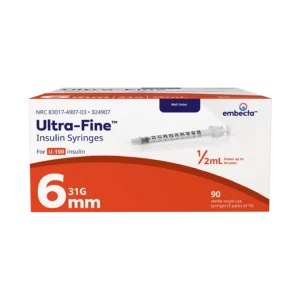
Best for Precise Dosing: Combines the comfortable 6mm length with a half-unit scale for highly accurate insulin measurement.
Frequently Asked Questions
Is a 1/4 inch needle long enough for insulin?
Yes, for the vast majority of patients, a 1/4 inch (6mm) needle is long enough to reach the subcutaneous fat layer where insulin is most effectively absorbed.
Does a 5/8 inch needle hurt more than a 1/4 inch needle?
Generally, yes. Longer needles like the 5/8 inch size often have a lower gauge (thicker) and penetrate deeper, which can increase the sensation of the injection compared to a thin 31G 1/4 inch needle.
Do I need to pinch my skin with a 1/4 inch needle?
Most medical guidelines suggest that a skin pinch is not necessary when using a 6mm (1/4 inch) needle, though you should always follow the specific technique taught by your doctor.