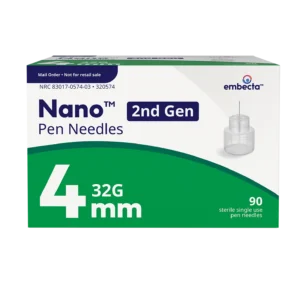
33G vs 32G: Which Should You Choose?
Understanding the Needle Gauge System
When managing diabetes, the comfort of your daily injections often depends on the needle gauge. In the world of medical supplies, the term gauge refers to the thickness of the needle. A critical point for beginners to remember is that the higher the gauge number, the thinner the needle. Therefore, when comparing 33G vs 32G, the 33G needle is actually thinner than the 32G needle. Selecting an ultra-fine gauge can significantly reduce the sensation of the injection, making it a preferred choice for those with needle sensitivity or those who inject multiple times per day. At GlucoseGear, we provide a wide range of pen needles designed to make this process as painless as possible.
32G: The Industry Standard for Comfort
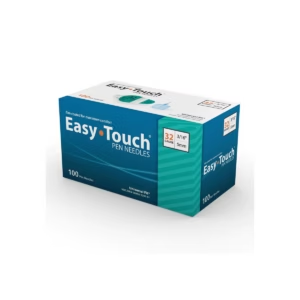
The 32G needle is widely considered the gold standard for ultra-fine insulin delivery. It offers an exceptional balance between comfort and performance. Because it is slightly thicker than a 33G needle, it often provides a more robust flow rate. This means that the insulin can be delivered more quickly and with less pressure on the pen plunger. For many users, 32G needles represent the perfect middle ground: they are thin enough to be virtually painless but sturdy enough to prevent bending during use. Leading brands like BD and EasyTouch have perfected the 32G design to ensure a smooth injection experience every time.
33G: The Extra-Fine Alternative
The 33G needle is one of the thinnest options available on the market today. It is specifically designed for users who prioritize maximum comfort above all else. While the difference in diameter between 33G and 32G is measured in fractions of a millimeter, some highly sensitive users report a noticeable reduction in pain with the thinner 33G option. However, there is a trade-off. Thinner needles have a narrower internal diameter, which can sometimes lead to a slower flow of insulin. If you use a high dose of insulin or a thicker concentrated insulin, you may find that a 33G needle requires more effort to depress the plunger compared to a 32G needle.
33G vs 32G Comparison Table
This table breaks down the primary differences between these two ultra-fine gauges to help you determine which fits your lifestyle and medical requirements.
Key Differences at a Glance
- Gauge 32G: Approximately 0.23mm diameter. High flow rate. Excellent comfort. Very common.
- Gauge 33G: Approximately 0.20mm diameter. Moderate flow rate. Maximum comfort. Specialty fine gauge.
- Durability: 32G needles are slightly more resistant to bending than 33G needles.
- Availability: 32G is widely available across most major brands, while 33G is often found in premium or specialized lines.
Comparison of 32G and 33G specifications:
How to Choose the Right Gauge for You
Choosing between 33G and 32G often comes down to personal preference and your specific insulin regimen.
Best for Most Users: Offers the ideal balance of a very fine gauge and a reliable flow rate at a competitive price.
Best for Sensitive Skin: Combines a 32G thickness with specialized lubrication and a 4mm length for the most comfortable injection possible.
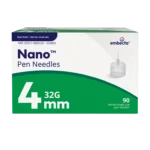
Best Value Choice: An affordable option for those who want the comfort of a 32G needle without the premium brand price tag.
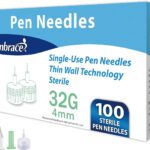
The Importance of Needle Length
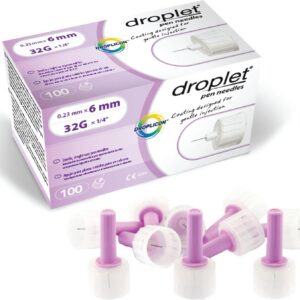
While gauge determines the thickness, the length of the needle is equally important for a successful injection. Most 32G and 33G needles come in short lengths, such as 4mm or 5mm. These shorter needles are designed to deliver insulin into the subcutaneous fat layer rather than the muscle, which is both safer and less painful. If you are currently using a longer needle and find it uncomfortable, switching to a 32G x 4mm needle like the Droplet Pen Needles may provide the relief you are looking for. For more information on choosing the right size, see our Pen Needles: Guide and Comparison.
Frequently Asked Questions
Is a 33G needle always less painful than 32G?
While 33G is technically thinner, the difference is very small. Most users find both gauges to be extremely comfortable. Pain is often more related to injection technique and the quality of the needle coating than just the gauge itself.
Can I use 32G pen needles with any insulin pen?
Yes, most 32G pen needles feature a universal fit that is compatible with the majority of insulin pens available on the market today.
Does a thinner needle increase the risk of insulin leaking?
Not necessarily. Leaking is usually caused by removing the needle too quickly after injection. It is recommended to leave the needle in the skin for about 10 seconds after the plunger is fully depressed to ensure full delivery.
Why is 32G more common than 33G?
32G provides a robust enough structure to prevent bending while still being thin enough to minimize pain. It also supports a faster flow rate, making it more versatile for different types of insulin.