30G vs 32G: Which Needle is Best?
Understanding Needle Gauge: 30G vs 32G
When managing diabetes, the thickness of your needle plays a significant role in your daily routine. Needle thickness is measured by gauge, often abbreviated as G. A crucial rule to remember is that the higher the gauge number, the thinner the needle. Therefore, a 32G needle is thinner than a 30G needle. While the difference might seem microscopic, it can affect how much you feel the injection and how quickly the medication flows through the needle. Choosing the right gauge is about finding a balance between comfort and functionality. For many users, switching from a lower gauge to a higher one can reduce anxiety around injections, while others prefer the sturdiness of a slightly thicker needle.
The 30G Needle: Reliability and Flow
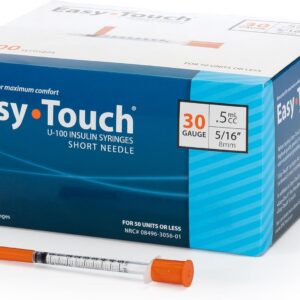
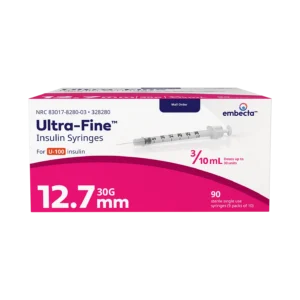
A 30G needle is considered a standard size for many insulin syringes. Because it is slightly thicker than a 32G needle, it offers a higher flow rate. This means that the insulin passes through the needle more quickly, which can be beneficial for individuals who take larger doses. The added thickness also provides more structural integrity, making the needle less likely to bend during use. While it is thicker than a 32G, modern manufacturing techniques ensure that 30G needles are still incredibly fine and cause minimal discomfort for the majority of users.
The 32G Needle: Maximum Comfort
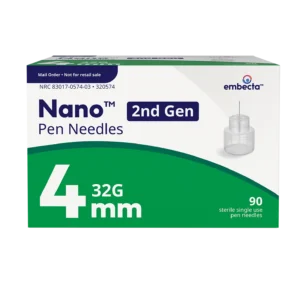
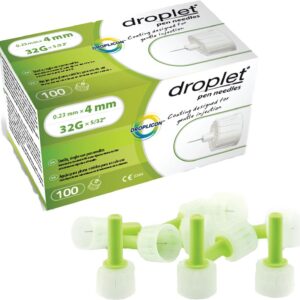
The 32G needle represents the ultra fine end of the spectrum, commonly found in the pen needles category. These needles are designed specifically for individuals who are highly sensitive to pain or those who have a fear of needles. Because the diameter is so small, the puncture is nearly imperceptible. This makes 32G needles an excellent choice for children or adults with thin skin. However, the trade-off for this extreme thinness is a slightly slower flow rate. If you are injecting a large amount of insulin, you may need to hold the pen in place for a few extra seconds to ensure the full dose is delivered.
Comparison Table: 30G vs 32G
The following table summarizes the primary differences between these two common needle gauges to help you decide which is right for your needs.
Gauge Comparison Summary
- Diameter: 30G is approximately 0.31mm, while 32G is approximately 0.23mm.
- Pain Perception: 32G is generally rated as more comfortable and less painful.
- Flow Rate: 30G allows for faster insulin delivery compared to 32G.
- Durability: 30G is slightly more resistant to bending than the ultra thin 32G.
- Best Use: 30G is common for syringes, while 32G is a favorite for insulin pens.
Key differences at a glance:
Who Should Choose Which Gauge?
Depending on your specific needs, one gauge may be clearly superior to the other.
Best for Sensitive Skin: The 32G thickness is ultra thin, providing a nearly painless experience for those with high sensitivity.
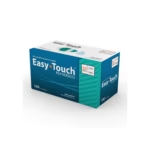
Best for Larger Doses: The 30G needle allows for a faster flow rate, making it easier to inject full 1.0cc doses quickly.
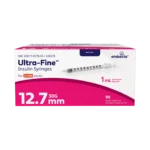
Best Value 32G Option: These offer the comfort of a 32G gauge at a very competitive price point for a 100 count box.
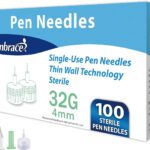
Factors to Consider Beyond Gauge
While the gauge is important, it is not the only factor in injection comfort. Needle length is equally vital. For example, a 4mm or 5mm needle is usually sufficient to reach the subcutaneous tissue without hitting muscle, regardless of whether it is 30G or 32G. Additionally, always use a fresh needle for every injection. Reusing needles causes the tip to become dull and barbed, which increases pain far more than the difference between gauge sizes ever would. To maintain hygiene, always use alcohol swabs to clean the injection site before you begin.
Frequently Asked Questions
Is a 32G needle always better than a 30G needle?
Not necessarily. While 32G is thinner and often more comfortable, 30G is sturdier and allows for faster insulin flow. The ‘better’ needle depends on your dose size and personal pain tolerance.
Can I use 32G needles with any insulin pen?
Most 32G pen needles are designed to be universal and will fit standard insulin pens. However, you should always check the product compatibility list to be certain.
Does the needle gauge affect the insulin’s effectiveness?
No, the gauge does not change how the insulin works in your body. It only affects the physical experience of the injection and the time it takes to depress the plunger.
Why is my 32G needle taking so long to inject?
Because the 32G needle is so thin, there is more resistance. You may need to apply steady pressure and wait for several seconds after the dial hits zero to ensure the full dose is delivered.