30G vs 27G: Which Should You Choose?
Understanding Needle Gauges: 30G vs 27G
When selecting medical supplies, understanding the gauge system is essential for ensuring both comfort and efficacy. The term gauge refers to the outer diameter of the needle. In this system, the higher the number, the thinner the needle. Therefore, a 30G needle is significantly thinner than a 27G needle. Choosing between these two sizes is a common decision for individuals managing various health conditions that require regular injections. Both sizes are widely available in the Standard Syringes and Needles category, but they serve slightly different purposes based on the user’s needs for comfort and flow speed.
The 30G Needle: Ultra-Fine Comfort
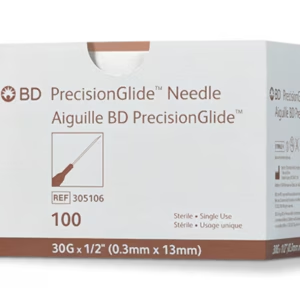
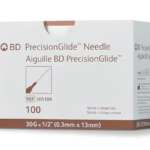
A 30G needle has an outer diameter of approximately 0.31 mm. This makes it one of the thinner options available for hypodermic use. Because it is so fine, it is designed to minimize the sensation of the injection and reduce tissue trauma at the site. This is particularly beneficial for individuals who must perform frequent injections throughout the day. However, because the lumen (the hollow center of the needle) is narrower, it may take longer to draw or inject medication, especially if the fluid is slightly viscous. The BD PrecisionGlide 30G needle is a popular choice for those prioritizing a gentle experience.
The 27G Needle: Versatility and Flow
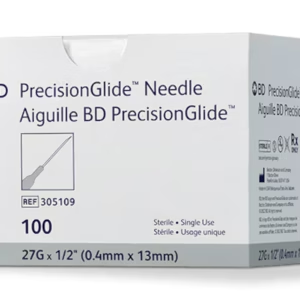
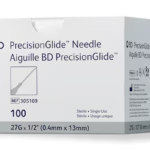
The 27G needle measures approximately 0.41 mm in diameter. While still considered a fine-gauge needle, it is thicker than the 30G. This extra width allows for a faster flow rate, making it easier to administer medications quickly. For many users, the 27G offers a perfect balance: it is thin enough to remain relatively comfortable while being robust enough to handle a wider variety of fluids without significant resistance. Additionally, the BD PrecisionGlide 27G needle is often available at a lower price point per box compared to ultra-fine gauges, making it a cost-effective option for many households.
Key Differences at a Glance
To help you make an informed decision, here is a comparison of the primary characteristics of 30G and 27G needles. Comparison Table:
| Feature | 30G Needle | 27G Needle |
|---|---|---|
| Outer Diameter | 0.31 mm | 0.41 mm |
| Relative Thickness | Thinner | Thicker |
| Flow Speed | Slower | Faster |
| Injection Comfort | Highest | High |
| Durability | Lower | Higher |
Which Gauge is Right for You?
The choice between 30G and 27G often comes down to your specific medication and your personal sensitivity to injections. Consider the following recommendations based on typical use cases.
Best for Sensitive Skin: The ultra-fine 30G diameter provides the most comfortable injection experience for those who are sensitive to needles.
Best for Value and Versatility: The 27G offers a faster flow rate and is significantly more affordable for a 100 count box.
Additional Injection Supplies
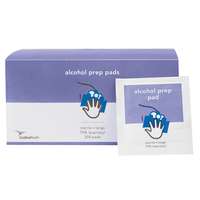
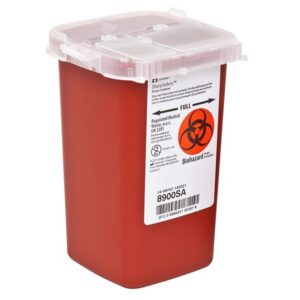
Regardless of which needle gauge you choose, proper preparation is vital for safety. Always cleanse the injection site with high-quality Alcohol Swabs to prevent infection. For those using standard syringes, ensure you have a compatible Luer lock or slip tip barrel that matches your needle selection. Proper disposal is also mandatory; always use a puncture-resistant container like the Covidien SharpSafety Sharps Container to protect yourself and others.
Frequently Asked Questions
Is a 30G needle significantly less painful than a 27G?
For many users, the 30G needle feels slightly less noticeable due to its smaller diameter. However, the difference is often subtle, and many people find the 27G to be very comfortable as well.
Can I use a 30G needle for all medications?
Not necessarily. Very thin needles like 30G can be difficult to use with thicker or more viscous medications. If the fluid is thick, a 27G or even a 25G needle may be required to ensure the medication flows correctly.
Why is the 27G needle cheaper than the 30G?
Ultra-fine needles like the 30G require more specialized manufacturing processes to ensure the thin metal remains strong and sharp. Standard fine gauges like 27G are more common and generally more cost-effective to produce.
Are these needles compatible with any syringe?
Most individual needles, like the BD PrecisionGlide series, are designed to fit standard Luer lock or Luer slip syringes. Always check the connection type of your syringe barrel before purchasing.