28G vs 32G: Which Should You Choose?
Understanding Needle Gauges: The Basics
When selecting medical supplies like insulin syringes or pen needles, you will often see a number followed by the letter G. This stands for gauge, which refers to the thickness of the needle. The most important thing to remember is that the gauge system is inverse; the higher the number, the thinner the needle. Therefore, a 32G needle is significantly thinner than a 28G needle. Understanding this relationship is the first step in finding a product that balances comfort with effective medication delivery.
28G Needles: Sturdy and Reliable
A 28G needle has an outer diameter of approximately 0.36 mm. Because they are thicker, they are less likely to bend or break during use. This gauge is very common in lancets and traditional insulin syringes. For individuals with thicker skin or those who find that thinner needles do not penetrate effectively, a 28G option provides the necessary durability. It also allows for a faster flow rate, which can be helpful if you are injecting a more viscous medication.
32G Needles: The Ultra-Thin Choice
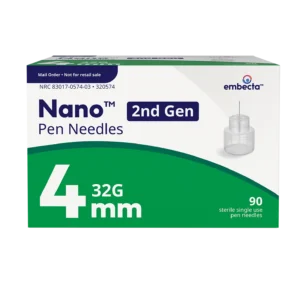
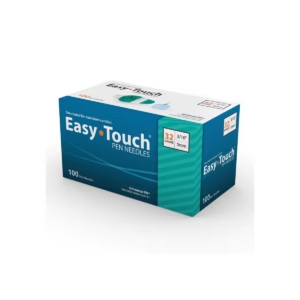
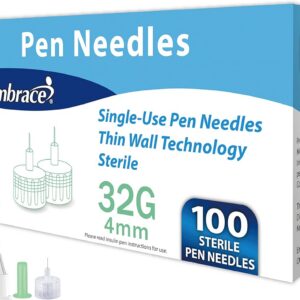
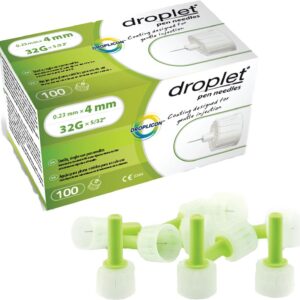
A 32G needle is much thinner, with a diameter of about 0.23 mm. These are typically found in the pen needles category. The primary benefit of a 32G needle is comfort. Because the needle is so fine, it causes less trauma to the skin and underlying tissue, often resulting in a nearly painless injection. This makes them a preferred choice for children, individuals with needle phobia, or anyone who performs multiple injections daily and wants to minimize discomfort.
28G vs 32G Comparison Table
To help you visualize the differences, here is a quick comparison of the two gauges:
| Feature | 28G Needle | 32G Needle |
|---|---|---|
| Outer Diameter | ~0.36 mm | ~0.23 mm |
| Pain Level | Low to Moderate | Minimal |
| Flow Rate | High/Fast | Lower/Slower |
| Common Products | Syringes, Lancets | Pen Needles |
| Durability | High | Lower (more delicate) |
How to Choose the Right Gauge
The choice between 28G and 32G often comes down to personal preference and medical necessity. Consider the following factors when making your decision:
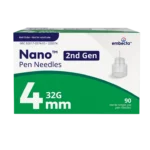
Best for Comfort: These ultra-thin needles are designed for maximum comfort and are a top choice for regular pen users.
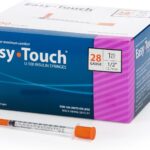
Best for Traditional Syringes: A reliable 28G option for those who prefer the flow rate and stability of a standard syringe.
Frequently Asked Questions
Is 32G thinner than 28G?
Yes, in the needle gauge system, the higher the number, the thinner the needle. A 32G needle has a much smaller diameter than a 28G needle.
Does a higher gauge needle hurt less?
Generally, yes. Higher gauge needles like 32G are thinner and cause less sensation when entering the skin, which typically results in less pain compared to a 28G needle.
Can I use 32G needles for all types of insulin?
Most standard insulins work well with 32G needles. however, if you find that the injection takes too long or requires excessive pressure, you might consider a slightly thicker gauge like 31G or 30G.
Why would someone choose a 28G needle over a 32G?
A person might choose 28G if they have thicker skin, if they are using a lancet that requires a deeper puncture for a blood sample, or if they find thinner needles too fragile for their injection technique.